
California 4-Point Inspection: What It Is and When Insurers Require One
A 4-point inspection is a focused report on a home's roof, electrical, plumbing, and HVAC systems — the four most expensive systems insurers worry about. California carriers increasingly require one for older homes (typically 20+ years) before binding or renewing coverage.
Book a 4-Point InspectionIf your carrier sent a letter asking for a 4-point before they would bind or renew, you're not alone. The same form that has been standard in Florida for years is now arriving in California mailboxes, driven by a wave of non-renewals on older homes after years of catastrophic wildfire losses.
This guide walks through exactly what gets inspected, what triggers insurer concern, when you'll be asked for the report, what it costs, and how the 4-point inspection differs from a full home inspection.
The short version: A 4-point inspection takes 45–90 minutes, costs $175 flat in Santa Barbara County, and documents the age and condition of your roof, electrical, plumbing, and HVAC. Insurers use it to decide whether to write or renew your policy. It is not a home inspection — the foundation, drainage, structure, and dozens of other systems are out of scope.
What the four points actually are
Each "point" is one major system. For each, an inspector documents age, materials, observed condition, and any safety or functional defects on the carrier's form.
The reason these four were chosen is straightforward: they are the systems whose failure produces the largest insurance claims. A roof failure becomes interior water damage and mold. An electrical failure becomes a structure fire.
A plumbing failure becomes flooded floors and drywall. An HVAC failure becomes carbon-monoxide exposure or a refrigerant leak. Underwriters have a century of loss data telling them where the money goes, and these are the systems on that list.
Here is what we look at for each, and the findings that consistently trigger underwriter pushback.
1Roof
What inspectors check
- Covering type (asphalt, tile, metal, foam, wood) and age
- Remaining useful life estimate
- Visible damage: cracked tiles, curled shingles, granular loss, ponding
- Flashing, valleys, penetrations, and underlayment where visible
- Active or past leak evidence in the attic or ceilings
Red flags for insurers
- Asphalt shingles past 15–20 years
- Tile roofs with failed underlayment ("lift & relay" territory)
- Less than 3–5 years of remaining useful life
- Active leaks or significant prior repairs
2Electrical
What inspectors check
- Panel brand, age, amperage, and dead-front condition
- Branch wiring type (copper, aluminum, knob-and-tube)
- Double-tapped breakers, missing knockouts, exposed splices
- GFCI and AFCI protection where required
- Grounding and bonding of the service
Red flags for insurers
- Federal Pacific Stab-Lok — routinely uninsurable
- Zinsco / Sylvania-Zinsco — routinely uninsurable
- Knob-and-tube or aluminum branch wiring
- Fuse panels, undersized service (60-amp), or Pushmatic boxes
3Plumbing
What inspectors check
- Supply piping material (copper, PEX, galvanized, polybutylene)
- Drain piping material (ABS, PVC, cast iron, Orangeburg)
- Water heater age, type, and TPR/seismic strapping
- Active leaks, corrosion, and prior repairs
- Main shut-off location and function
Red flags for insurers
- Polybutylene supply lines — rupture-prone, often non-insurable
- Galvanized supply piping over ~40 years old
- Water heater over 12–15 years or unstrapped
- Active drips, staining, or visible corrosion
4HVAC
What inspectors check
- Equipment type, age, and manufacturer data
- Cooling and heating operation at the thermostat
- Condition of supply and return ducts where visible
- Combustion air, venting, and flue condition (gas)
- Condensate handling and visible refrigerant lines
Red flags for insurers
- Furnace or AC over 15–20 years old
- System non-functional at time of inspection
- Improper venting or rusted heat exchanger evidence
- Heavy water staining at the air handler
Why California is adopting 4-Points
The insurance market squeeze
The 4-point form was perfected in Florida, where hurricane-driven losses pushed carriers to demand documentation on older homes before they would write coverage. For decades, California sat on the other side of that line — a stable, profitable market where homeowner policies renewed automatically.
That has changed. After consecutive years of catastrophic wildfire losses, several of the largest national carriers paused new-business writing in California, and others stopped renewing tens of thousands of existing policies.
The California FAIR Plan — the insurer of last resort — has absorbed the overflow and is now the largest writer of homeowners coverage in several high-risk ZIP codes. The carriers that remain in the market have responded the way Florida insurers did: by demanding proof of condition before they will bind or renew.
What carriers want documented
For older California homes, that proof increasingly takes the shape of a 4-point inspection. Pre-1990 builds, homes with original roofs, and any house with a flagged panel brand are the most likely to be asked.
Even newer homes in wildfire-exposed canyons are seeing requests when a carrier switches, a claim is filed, or the property moves onto the FAIR Plan. If you want the deeper read on why carriers are pulling back, our California insurance inspections guide covers the broader picture.
From optional to required
The practical effect for homeowners: the inspection has moved from optional to required. Five years ago, the only Californians asking for 4-points were buyers moving here from Florida who already knew the form.
Today, the requests come from local underwriters writing local risks, on local forms. The Santa Barbara County housing stock — large segments built in the 1950s, 1960s and 1970s, with original panels, original underlayment, and original galvanized supply lines — sits squarely in the age range carriers are now scrutinizing.
A 4-point is the document that translates "the house is fine" from a feeling into a record an underwriter can file.
When you'll be asked for one
You will rarely be asked for a 4-point out of the blue. The request almost always follows one of these triggers:
| Trigger | Typical threshold | What the carrier does |
|---|---|---|
| Home age | 20–30+ years | Requests 4-point at new-business binding or renewal |
| Roof age | Roof 15+ years (asphalt) or 25+ years (tile) | Requests roof condition report or full 4-point |
| Recent claim | 1+ claim in the last 3–5 years | Requires 4-point before renewal decision |
| FAIR Plan issuance | Any older home placing onto the FAIR Plan | Typically requires 4-point and roof verification |
| Carrier switching | After a non-renewal or shopping for new coverage | New carrier requires 4-point before binding |
| Purchase in escrow | Buying an older home; lender requires bound coverage | Required before close so a policy can be written |
At purchase or by lender
If you're buying an older home and your lender requires bound coverage to close, the carrier writing the policy will almost always ask for a 4-point before binding. The request comes in escrow, usually from the agent placing the policy.
If you received a letter, look for the phrase "4-point inspection" or "verification of the roof, electrical, plumbing and HVAC." That's what they want. Some carriers send their own preferred form — we complete the inspection on that form so it can be submitted directly.
At renewal or after a non-renewal letter
One thing to watch: deadlines on these letters are short. Carriers typically give 30 to 60 days from the date of the letter, and a missed deadline can convert a request into a non-renewal.
If you've been sitting on a request because you weren't sure what it meant, the next steps are:
- Call your agent: ask which inspection they actually want.
- Book it: on the carrier's form, with a qualified inspector.
- Send it before the deadline: on the form the carrier provided.
What insurers are looking for (red flags)
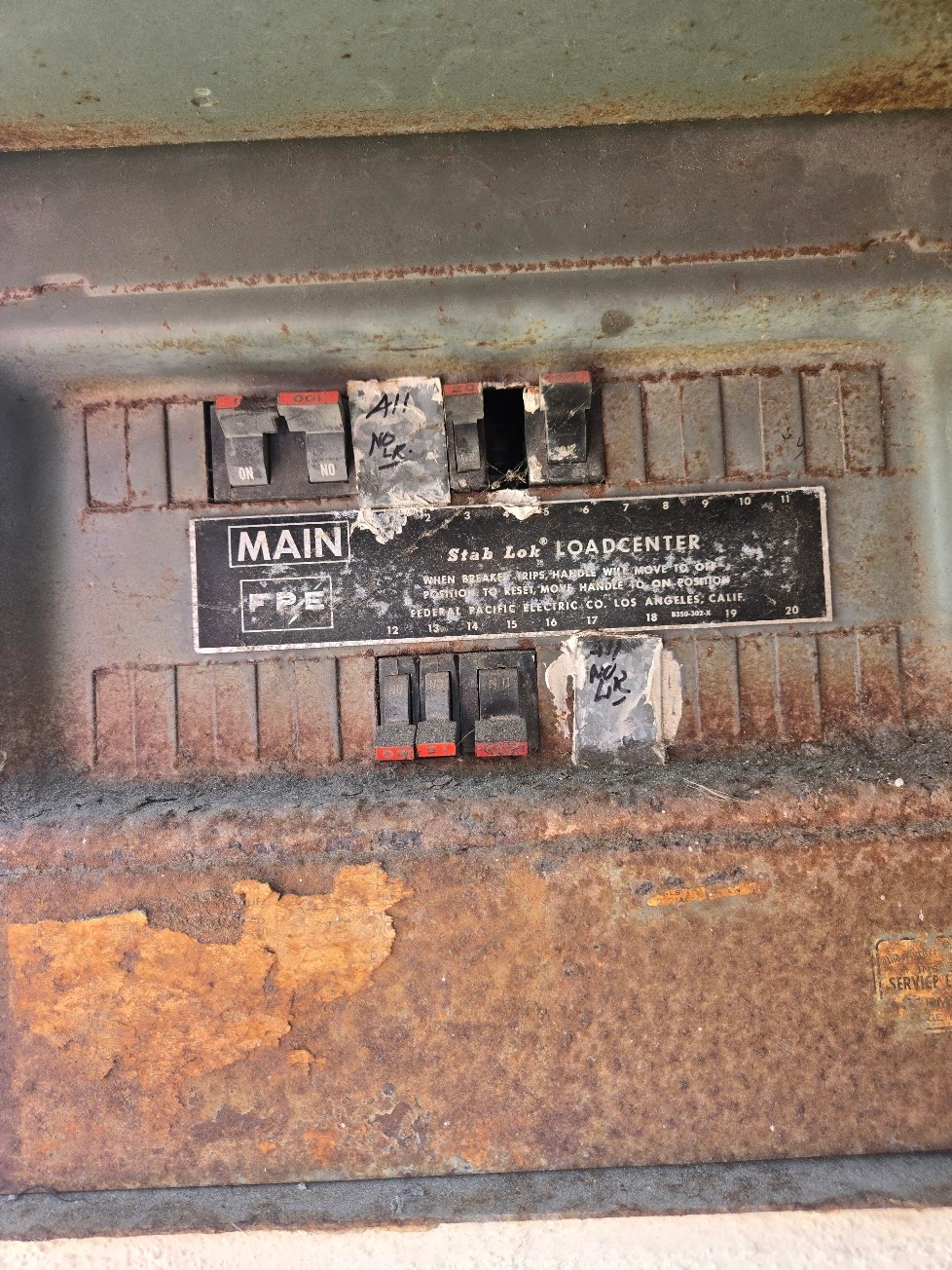
The 4-point report is condition documentation, but every line item maps to a specific underwriting concern. These are the findings that most often change a binding decision:
| System | Red flag | Likely insurer response |
|---|---|---|
| Roof | Asphalt shingle 15+ years old | Replacement required before binding or non-renewal |
| Roof | Tile roof with failed underlayment | Lift-and-relay or full replacement required |
| Electrical | Federal Pacific Stab-Lok | Non-insurable until replaced |
| Electrical | Zinsco / Sylvania-Zinsco | Non-insurable until replaced |
| Electrical | Knob-and-tube or aluminum branch wiring | Coverage often denied or requires remediation |
| Electrical | 60-amp service or fuse box | Service upgrade typically required |
| Plumbing | Polybutylene supply lines | Repipe required before binding |
| Plumbing | Galvanized supply piping, 40+ years | Repipe or higher premium / exclusions |
| Plumbing | Water heater 15+ years, unstrapped | Replacement and strapping required |
| HVAC | Furnace or AC 15+ years | Inspection often allowed; replacement sometimes required |
| HVAC | Non-operational at time of inspection | Repair required and re-inspection |
When red flags stack on one property
None of these are deal-breakers for a homeowner — they are signals. A replacement, repair, or repipe brings the home back into insurable shape, and a follow-up inspection documents the fix.
Where it gets uncomfortable is when several of these stack up on one property: a 30-year-old asphalt roof and a Federal Pacific panel and galvanized supply lines. At that point underwriters tend to walk, and the FAIR Plan often becomes the only path to coverage until upgrades are made.
Documenting the fix
If the 4-point flags an issue you didn't know about, that's actually the point of the report. Insurers reward documented upgrades: replace a flagged panel, hand the inspector your permit and final, and the next report comes back clean.
We frequently re-inspect the same home a few months after a repipe or roof replacement so the homeowner can submit an updated 4-point to their carrier and clear the file.
4-Point vs full home inspection
Buyers in escrow ask us this constantly. The two reports are not interchangeable; they exist for different audiences and have different scopes.
4-Point Inspection
Built for the insurer. Roof, electrical, plumbing, HVAC — age and condition on the carrier's required form. 45–90 minutes on site, $175 flat in Santa Barbara County, delivered same-day so your agent can submit it before the deadline.
Full Home Inspection
Built for the buyer or owner. Foundation, structure, drainage, exterior, attic, crawl space, appliances and the four 4-point systems — all in one narrative report. 2.5–4 hours on site, $450–$900+ depending on size.
| 4-Point Inspection | Full Home Inspection | |
|---|---|---|
| Scope | Roof, electrical, plumbing, HVAC | All visible systems — foundation, structure, exterior, roof, attic, electrical, plumbing, HVAC, appliances, drainage, crawl space, more |
| Depth | Age, condition, defects on each of 4 systems | Full narrative with defects, safety items, deferred maintenance, and recommendations across the whole property |
| Typical cost (CA) | $150–$300 (we charge $175 flat in SB County) | $450–$900+ depending on size and add-ons |
| When to use | An insurance carrier or FAIR Plan asked for it; you're switching carriers; older-home renewal | You're buying a home; selling and want a pre-listing; periodic maintenance review |
| Who orders | Homeowner or buyer, at carrier's request | Buyer (most often), seller (pre-listing), or owner (annual maintenance) |
| Deliverable | Insurer's 4-point form, signed by the inspector | 20–60+ page narrative report with photos for the client |
| Duration | 45–90 minutes | 2.5–4 hours |
If you're buying an older home in escrow, you may need both: a full inspection for your own due diligence, and a 4-point so the lender's required policy can bind. We routinely bundle the two on the same site visit.
Why a home inspection can't substitute
A full home inspection report is not a substitute for a 4-point. Even if the home inspection covers all four systems in detail, it doesn't sit on the carrier's required form — and underwriters reject reports that aren't on their form.
The 4-point form is filled out by the inspector at the time of inspection; we do not "translate" a recent home-inspection report into a 4-point after the fact. Both reports require a fresh on-site visit, though we can complete them on the same trip and keep the total cost low.
What it costs in California
Coastal Shield's flat rate
$175 flat, Santa Barbara County
Includes the on-site inspection, completion of the carrier's 4-point form, and digital delivery so you can forward it to your agent or underwriter directly.
California ranges
Across California, 4-point inspections typically run $150 to $300. Some firms charge by square footage; we keep ours flat so there are no surprises. See full pricing on our pricing page.
What affects price
Pricing varies by region, square footage, and whether the inspector bundles the report with additional documentation — a roof condition report, an electrical panel verification, or a wildfire-mitigation report can be added at the same visit.
If your home is on the FAIR Plan or being placed onto it, expect the carrier to request 4-point and a separate roof condition report at minimum. We can complete both at the same visit so you're not paying two trip fees.
What not to pay for
Some companies advertise 4-points at very low prices and then upsell additional reports, photos, or "expedited" delivery. A complete 4-point should include the carrier's full form, dated and signed by a qualified inspector, with photos of the panel, roof, water heater, and HVAC condenser.
That's the deliverable that gets accepted by underwriting. Anything less typically comes back from the carrier with a request for more documentation, which means a second visit and another fee.
Common questions
California 4-point inspections, answered.
What is a 4-point inspection?
How much does a 4-point inspection cost in California?
Is a 4-point inspection the same as a home inspection?
How long does a 4-point inspection take?
Who orders a 4-point inspection — the buyer or the homeowner?
Does a 4-point inspection include the foundation?
Will my insurance require a 4-point inspection if I have a Federal Pacific panel?
How long is a 4-point inspection valid?
Do I need a 4-point inspection if my house is new?
Can a 4-point inspection fail?
Need a 4-point inspection for your insurer?
$175 flat across Santa Barbara County. Completed on your carrier's form, delivered digitally, and ready to forward to your agent or underwriter the same day.
This article is general information, not insurance or legal advice. Coverage decisions rest solely with your insurer. Coastal Shield documents a home's observed condition on the 4-point form; it does not issue policies or guarantee coverage outcomes. Specific carrier requirements, thresholds, and acceptable findings vary by company and product.