Santa Barbara SLIP Program: A Plain-English Guide to Sewer Lateral Letters, Grading & Compliance
The Sewer Lateral Inspection Program (SLIP) is a City of Santa Barbara ordinance requiring property owners to CCTV-inspect their private sewer lateral when triggered by a city letter, sewer spill, ADU permit, or commercial 10-year cycle.
See our sewer scope serviceIf a City of Santa Barbara envelope landed on your front porch this week with the words "Sewer Lateral Inspection Program" on the letterhead, this guide is for you. The letter is real, the deadline is real, and the program is straightforward once you understand what it's actually asking for. The hard part is that almost nothing the City sends is written in plain English, and most homeowners arrive at the inspection step having spent two weeks confused about what they need to do, who they can hire, and how much it will cost. We wrote this guide so that doesn't happen to you.
SLIP is not a point-of-sale program. It's triggered by a small set of specific events: a city CCTV crew finds a defect that traces back to your lateral, a sewage spill happens on your lot, you pull an ADU or large-addition permit, or your commercial property hits its 10-year cycle. When that happens, you have to hire a city-certified CCTV inspector, film the lateral end-to-end, and the City grades it 0–5. Grades 0–2 close the case. Grades 3–5 require repairs on a defined timeline. A $300 Video Assistance Program (VAP) credit offsets most of the inspection cost for qualifying owners. Most homeowners get through it in under 90 days.
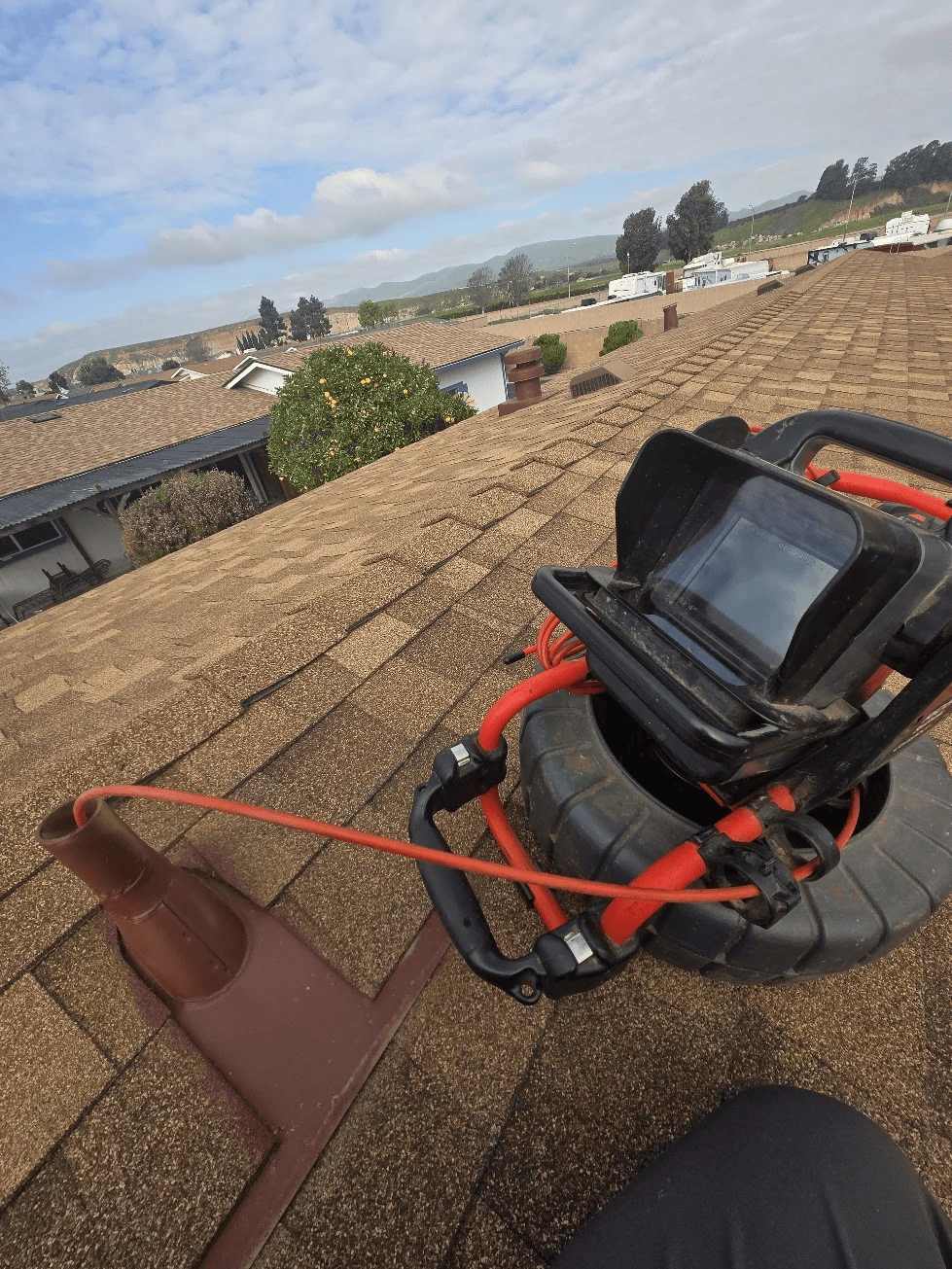
Our role on the SLIP side — and what this guide is built around — is the pre-screening scope: we run an HD camera through your lateral for $199 flat so you know exactly what your line looks like before you book the certified scope. That's the educational, no-surprises play. The sections below walk through how the program works, what each grade actually means, what it costs, and what to do this week if you have a letter in your hand. (Full disclosure on certification status appears in the cost section below.)
5 ways your property gets a SLIP case opened
The City does not randomly select properties for SLIP review. Cases are opened by one of five specific triggers. Knowing which trigger applies to your letter tells you what the City already saw, which timeline you're on, and how the case will close out.
| Trigger | Who initiates | Your deadline |
|---|---|---|
| City CCTV defect found in the main The City films its own main sewer lines on a rotating schedule. When a defect appears to be entering from a private lateral, the owner of that parcel receives a SLIP letter. | City Public Works Water Resources | Typically 60–90 days from the date of the letter to film the lateral. |
| PLSD/SSO sanitary sewer spill on your lot If a private lateral sewage discharge (PLSD) or sanitary sewer overflow (SSO) occurs on or originates from your property, SLIP review is automatic. | City response after the spill report is filed | Often expedited — 30 days is common because the line is actively failing. |
| ADU or addition over 400 sq ft A new accessory dwelling unit or a large addition adds capacity to the existing lateral. The City requires a CCTV inspection as a condition of the building permit. | Building & Safety, via the permit application | Before the permit is finalized — the case must close to clear the permit. |
| Commercial 10-year cycle Commercial properties are on a recurring 10-year SLIP cycle independent of any defect or spill. | City Water Resources, scheduled | Within the cycle window noted on the letter, typically 90 days. |
| Point-of-sale (clarification: NOT a SLIP trigger) This is the most common misconception. Selling a Santa Barbara home does not, by itself, open a SLIP case. Some title and disclosure searches surface previously open SLIP cases attached to the parcel, which can confuse buyers and sellers into thinking the sale triggered it — it didn't. | No one — SLIP is not point-of-sale | N/A — but an existing open case must be closed before a clean transfer. |
If you're holding a letter and you're not sure which trigger applies to your case, the case number in the upper right of the letter will tell the City everything when you call. Don't guess — call Public Works Water Resources, give them the case number, and ask what triggered it. That single phone call usually clears up 90% of the confusion homeowners experience.
Understanding the grade — what 0 through 5 actually mean
After a certified inspector films your lateral and submits the report, the City reviews the video and assigns a grade. The grade is the single most important number in the entire process. It determines whether your case closes immediately or whether you're on a repair clock.
| Grade | What the inspector saw | Required action | Typical deadline |
|---|---|---|---|
| 0 | No observable defects. Pipe is clean, joints are tight, flow is normal end-to-end. | None — case closes. | Immediate close-out. |
| 1 | Minor cosmetic findings — light surface scaling, light root presence at one joint, no flow impairment. | None required. The City may recommend monitoring. | Immediate close-out. |
| 2 | Moderate findings — isolated root mass, minor offset, mild scaling — that does not impair flow. | None required for SLIP. Owner-discretion maintenance recommended. | Immediate close-out. |
| 3 | Significant defect — offset joints, root intrusion that obstructs flow, sags (bellies), or cracking that compromises the line. | Repair or spot replacement required. | Up to 1 year from grade notification. |
| 4 | Severe defect — major offset, heavy root mass blocking flow, broken sections, or material failure (Orangeburg deformation). | Repair or replacement required, pulled permit. | Approximately 90 days. |
| 5 | Catastrophic failure — full collapse, complete blockage, separated joints with active leakage into surrounding soil. | Immediate full replacement, emergency permit. | Immediate — the line is actively failing. |
If your grade comes back 0, 1, or 2, the SLIP process is done. The case closes, you receive written confirmation, and that confirmation becomes part of the parcel's record. If the grade is 3, 4, or 5, the City sends a follow-up letter with the specific repairs required, the permit pathway, and the deadline. Both buyers and sellers can request the closed-case letter from the City's record system, which is one reason a clean SLIP grade is an asset at sale time even though SLIP itself isn't tied to the sale.
The 6-step compliance walkthrough
Here is the process from "I just got the letter" to "case closed." The whole thing can be wrapped up in 60–90 days for most properties without active failures.
Receive and read the SLIP letter
Open the letter promptly. Note the case number, the trigger, the parcel address, and the deadline. The case number is the reference for every follow-up call — write it on the outside of the envelope where you'll keep correspondence. If the letter is unclear or you're not sure which trigger applies, call Public Works Water Resources with the case number before doing anything else.
Request the $300 Video Assistance Program (VAP) credit
Before you book the inspection, contact the City and request the VAP credit application. The credit is paid to qualifying owners after a certified inspection is filed. Filing this application up front is what unlocks the credit — if you book and pay for the inspection without applying first, the credit may not back-apply. This step takes about ten minutes and is the single largest cost reduction in the whole program.
Hire a city-certified CCTV inspector
Choose an inspector from the City's published Certified CCTV Inspector list (Public Works Water Resources maintains and publishes the current list). Only certified inspectors can submit a report that closes a SLIP case. A pre-screening scope from a non-certified provider — like the $199 scope Coastal Shield runs — is useful for understanding your line in advance, but it doesn't replace the certified submission.
Schedule the inspection
Coordinate property access at the main cleanout. The certified inspector will film the lateral end-to-end from cleanout to the city main, capture the grade with industry-standard defect coding, and submit the video file and report directly to the City on your behalf. The on-site portion typically takes 30 to 60 minutes depending on access.
Review the grade report with the City
The City reviews the submitted video and issues a grade letter, typically within 2–4 weeks of submission. The letter states the grade, the required action (if any), and the deadline. If you're unsure how to interpret the grade or whether to dispute a finding, you can request a meeting with the case reviewer.
Complete required repairs or sign off
Grades 0–2 close out automatically. For Grades 3–5, pull a plumbing permit, hire a licensed plumber, complete the work on the City's timeline, and submit the final invoice and post-repair documentation. The City verifies the work (sometimes with a follow-up CCTV) and closes the case. You'll receive written confirmation of close-out for your records.
The $300 Video Assistance Program (VAP) credit
What it is
The Video Assistance Program is a $300 credit the City of Santa Barbara offers qualifying property owners to offset the cost of a certified SLIP CCTV inspection. It exists because the City wants high compliance rates — the easier and cheaper it is to get the inspection done, the more owners actually do it.
Who qualifies
Most owner-occupied residential properties that have received a SLIP letter qualify. Commercial properties on the 10-year cycle are typically not eligible because they're treated as a planned operating cost. Investment properties and second homes may or may not qualify depending on the program's current rules — ask the case reviewer.
How to claim
Apply with the City before the inspection is booked. After your certified inspector files the report, the City processes the credit and either applies it as a direct payment to the inspector (some certified inspectors accept VAP assignment) or reimburses you after you submit the paid invoice.
What it doesn't cover
- The pre-screening scope (this is owner-paid, separate from the certified scope).
- Any repairs required by Grades 3, 4, or 5.
- Plumbing permits or City fees associated with repair.
- Locating or cleanout-installation costs if your property has no accessible cleanout.
Most-missed point: Many homeowners discover the VAP credit only after they've already paid the certified inspector in full. Don't be that homeowner — apply first.
Why your sewer lateral matters (the SB-specific picture)
Santa Barbara's sewer lateral failure pattern is not the same as Phoenix, Sacramento, or San Diego. The combination of housing stock age, soil composition, hillside geology, and recent debris-flow history creates a very specific set of failure modes that the SLIP program is calibrated to catch.
Pre-1980 clay laterals are everywhere downtown. Most homes in the older Mesa flats, the Eastside, the Westside, and the downtown grid use segmented vitrified clay pipe with mortar or rubber-gasket joints. Clay itself is durable — ancient Roman clay pipes still function — but the joints are where Santa Barbara's tree-root pressure makes its move. A single ficus, eucalyptus, or magnolia root finds a joint seam, grows through it, and within a few seasons the joint has shifted enough to register as an offset or a partial blockage. We see this on Grades 2 and 3 video footage constantly.
Post-WWII Orangeburg pipe shows up in Mesa and Riviera neighborhoods. Orangeburg — tar-impregnated wood fiber pipe sold in the late 1940s and through the 1950s as a cheap clay substitute — is a SLIP failure waiting to happen. It deforms under soil load, blisters internally, and collapses without warning. If your home was built between roughly 1946 and 1960, there is a meaningful chance the lateral is at least partially Orangeburg. (We're publishing a deep-dive on this in parallel: see our Orangeburg pipe in Santa Barbara guide for material identification, replacement options, and how to spot it on a camera scope.) Homes of this vintage frequently come paired with galvanized supply lines and Zinsco or Federal Pacific service panels — the full vintage-home cluster worth understanding before you write an offer.
Hillside offset joints are a Riviera and Mission Canyon signature. Properties built on slopes settle differently than flat-lot homes. Decades of micro-shifting, occasional small earthquakes, and seasonal soil saturation cycles produce joint offsets that don't appear on flat-lot laterals. The grade impact is significant because even a half-inch offset becomes a root entry point and a sediment trap. If you live above De La Vina or up the canyons, expect your lateral to grade lower than a comparable downtown property of the same age.
Post-2018 Montecito debris-flow sediment is still in some laterals. Homes in the impact zone of the January 2018 debris flows received sediment loading that, in some properties, was never fully cleared. We've scoped Montecito laterals in 2024 and 2025 that still showed mud-line residue downstream of the original event. If your property was in or near the impact zone, the SLIP grade will reflect that history regardless of the lateral material. For broader context, our Santa Barbara sewer lateral inspection service page walks through the camera process and pricing.
What it costs
Here is the honest breakdown of what compliance with a Santa Barbara SLIP letter actually costs from start to finish. Numbers will vary by property, but these ranges hold for the great majority of single-family residences.
| Service | What you get | Typical price |
|---|---|---|
| Coastal Shield pre-screening scope | HD camera scope of your lateral from cleanout to the city main, shareable video link, written report with defect timestamps. Not a SLIP-compliant submission — an educational pre-screen so you know your line's condition before booking the certified scope. | $199 flat |
| City-Certified CCTV inspection | Filming and report submission by an inspector on the City's certified list. Closes the SLIP case once graded. | $300–$600 typical |
| VAP credit | City-funded credit applied to qualifying owners after the certified report is filed. | –$300 |
| Spot repair (Grade 3, isolated defect) | Targeted dig, one-section replacement, permit, restoration of surface. | $2,500–$6,000 |
| Full lateral replacement (Grade 4 or 5) | Trenchless lining or full open-trench replacement, permit, surface restoration, cleanout installation if needed. | $8,000–$25,000+ |
An honest note on certification: Coastal Shield is completing the City's CCTV certification course in Summer 2026. Until then, we recommend a pre-screening scope to know your lateral's condition before booking your certified inspection. The two scopes serve different purposes — the pre-screen gives you visibility and bid-leverage; the certified scope closes your SLIP case — and using both is the path most homeowners feel comfortable with when they want to know what they're walking into before the City sees the footage.
If your line comes back clean on the pre-screen, you book the certified scope confident that the case will close. If the pre-screen reveals a likely Grade 5 collapse, you can be on the phone with repair plumbers getting bids the same week, in parallel with the certified scope rather than after it. Either way, you're never surprised by the City's grade letter.
Common questions
SLIP program questions Santa Barbara homeowners actually ask.
What is the SLIP program in Santa Barbara?
Who is on the city's certified CCTV inspector list?
Does SLIP apply at point of sale?
What is the $300 Video Assistance Program (VAP) credit?
What is a Grade 3 versus a Grade 5?
How long do I have to complete SLIP repairs?
How much does a SLIP-compliant inspection cost?
Can I do a pre-screening scope before my certified SLIP inspection?
What if my lateral is Orangeburg or clay?
What happens if I ignore a SLIP letter?
Got a SLIP letter? We'll talk you through it.
A $199 pre-screening scope tells you exactly what the City is going to see — before you book the certified scope, before you pull a permit, before you stress about the grade. No repair upsells, no surprises.
This article is general information about the City of Santa Barbara's Sewer Lateral Inspection Program (SLIP) as it exists at publication. Grades, deadlines, VAP credit eligibility, and certified inspector lists are set and updated by the City of Santa Barbara Public Works Water Resources division — always confirm specifics with the case reviewer assigned to your letter. Until our certified inspector status is updated, Coastal Shield's role on the SLIP side is as a pre-screening (non-certified) sewer scope; see the certification disclosure in the cost section above.