
What to Expect on Inspection Day in Santa Barbara (2026 Buyer's Guide)
You're under contract on a Santa Barbara home and the inspection is booked. Here's exactly what happens on the day — start to finish — so you walk in knowing what to look for and walk out with a report you can actually use.
By Louis O'Connor, InterNACHI Certified Professional Inspector & 15-Year Journeyman Plumber
Before the Inspector Arrives
By the time inspection day arrives, the appointment has usually been coordinated between your agent, the listing agent, and us. The home should have all utilities on — water, gas, and electricity — because an inspector cannot test an HVAC system, water heater, or plumbing fixtures that are shut off. If the property is vacant and utilities were turned off, that gets arranged ahead of time. (Sellers: our preparation checklist covers everything that makes the day go smoothly.)
You don't need to do anything to prepare as the buyer. Just show up — ideally toward the end (more on that below) — and bring your questions.
How Long It Takes
Plan on 2.5 to 4 hours for a typical single-family home. Counterintuitively, a small 1920s bungalow downtown can take as long as a larger modern home, because an older property has a tight crawlspace, an aged electrical panel, and legacy plumbing that all demand a closer look. Beachfront and hillside estates with guest houses, multiple HVAC systems, or pools can run five hours or more.
We never rush a Santa Barbara inspection to hit a clock. The cost of missing a failing tile-roof underlayment or a cracked clay sewer lateral is measured in tens of thousands of dollars — so the time on site is time well spent.
Should You Attend?
Yes — and here's the smartest way to do it. You're welcome for the whole inspection, but the highest-value window is the last 30–45 minutes. That's when we walk you through the findings in person, point to the actual issue, and explain what it means in plain English.
There's a big difference between reading "evidence of moisture intrusion at the north elevation" on a PDF at 9 p.m. and standing in the room while your inspector shows you the stain, explains the likely cause, and tells you whether it's a $200 caulking fix or a sign of something behind the wall. Attending turns the report from a document into a conversation.
What Actually Gets Checked
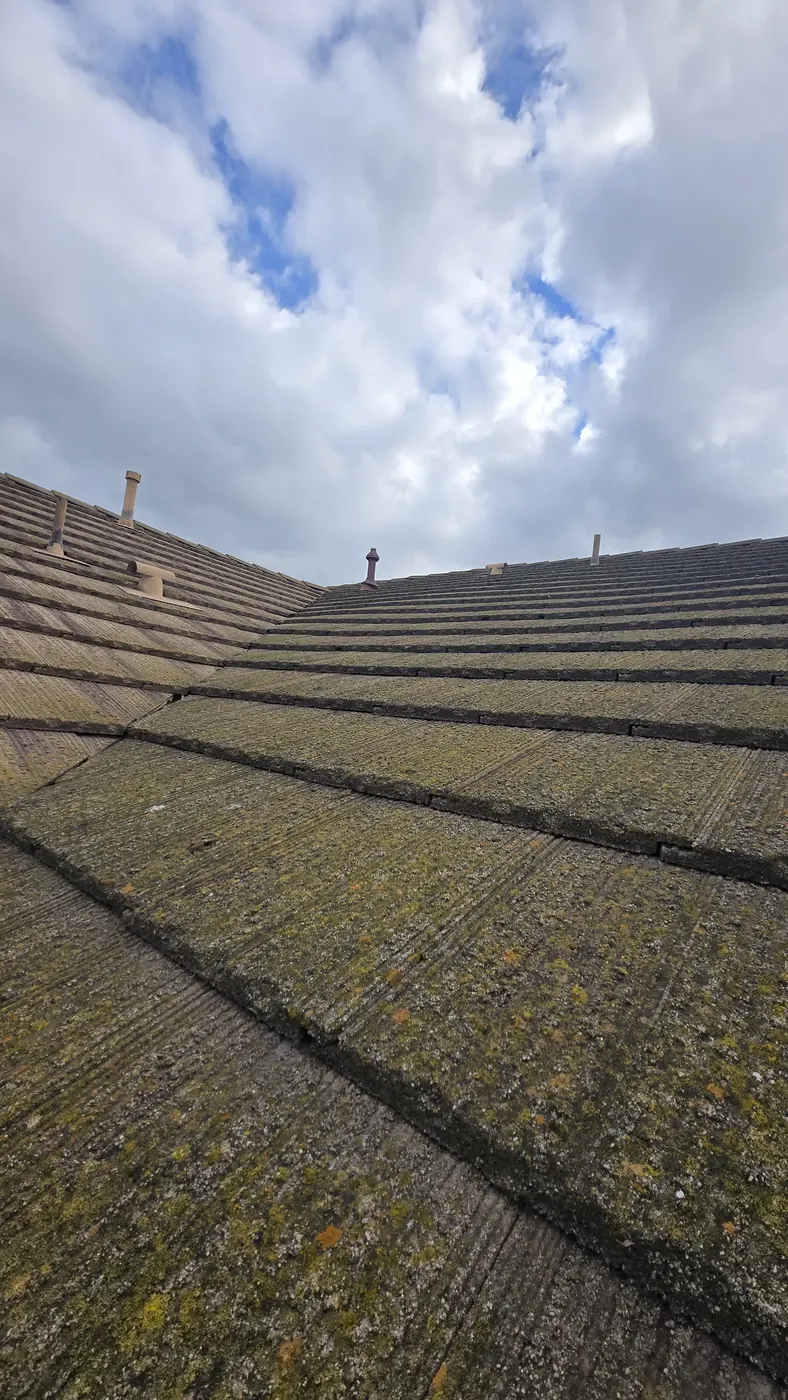
A standard home inspection is a visual, non-invasive evaluation of the home's accessible systems. On inspection day we work through:
- Roof & exterior: covering condition, flashing, gutters, drainage, siding, stucco, eaves, and grading around the structure.
- Structure & foundation: visible foundation, framing, signs of movement, and — critically in our hillside neighborhoods — evidence of slope-related stress.
- Attic & insulation: ventilation, insulation levels, the underside of the roof sheathing, and any signs of past leaks.
- Electrical: the service panel, breakers, bonding and grounding, GFCI/AFCI protection, and a search for the hazard panels insurers now reject.
- Plumbing: supply lines, drains, water heater, fixtures, water pressure, and visible signs of leaks or corrosion. As a journeyman plumber, this is where trade experience finds what a checklist misses.
- HVAC: heating and cooling equipment, operation, and apparent age and condition.
- Interior: rooms, walls, ceilings, floors, windows, doors, stairs, kitchen, bathrooms, and built-in appliances.
Each finding is photographed on the spot and tagged by severity — the foundation of the modern report you receive the same day.
What's Different About a Santa Barbara Inspection
Every market has its own quirks. A home inspection here isn't generic — the things most likely to cost you money are specific to our housing stock and climate:
Spanish Tile Roof Underlayment
The clay tiles last a century; the waterproof underlayment beneath them fails in 30–40 years. We assess underlayment condition closely because a "good-looking" tile roof can still be at the end of its waterproof life. See our roof inspection page.
Clay & Orangeburg Sewer Laterals
Mature oak and jacaranda tree roots constantly crush old clay and Orangeburg sewer lines in pre-1980 neighborhoods. A standard inspection can't see underground — that's why we recommend adding a $199 sewer scope.
Uninsurable Electrical Panels
Federal Pacific Stab-Lok and Zinsco panels are common in our older homes and most California carriers will no longer insure them. Catching one before escrow closes can save your financing — see our electrical panel inspection.
Marine-Layer Moisture
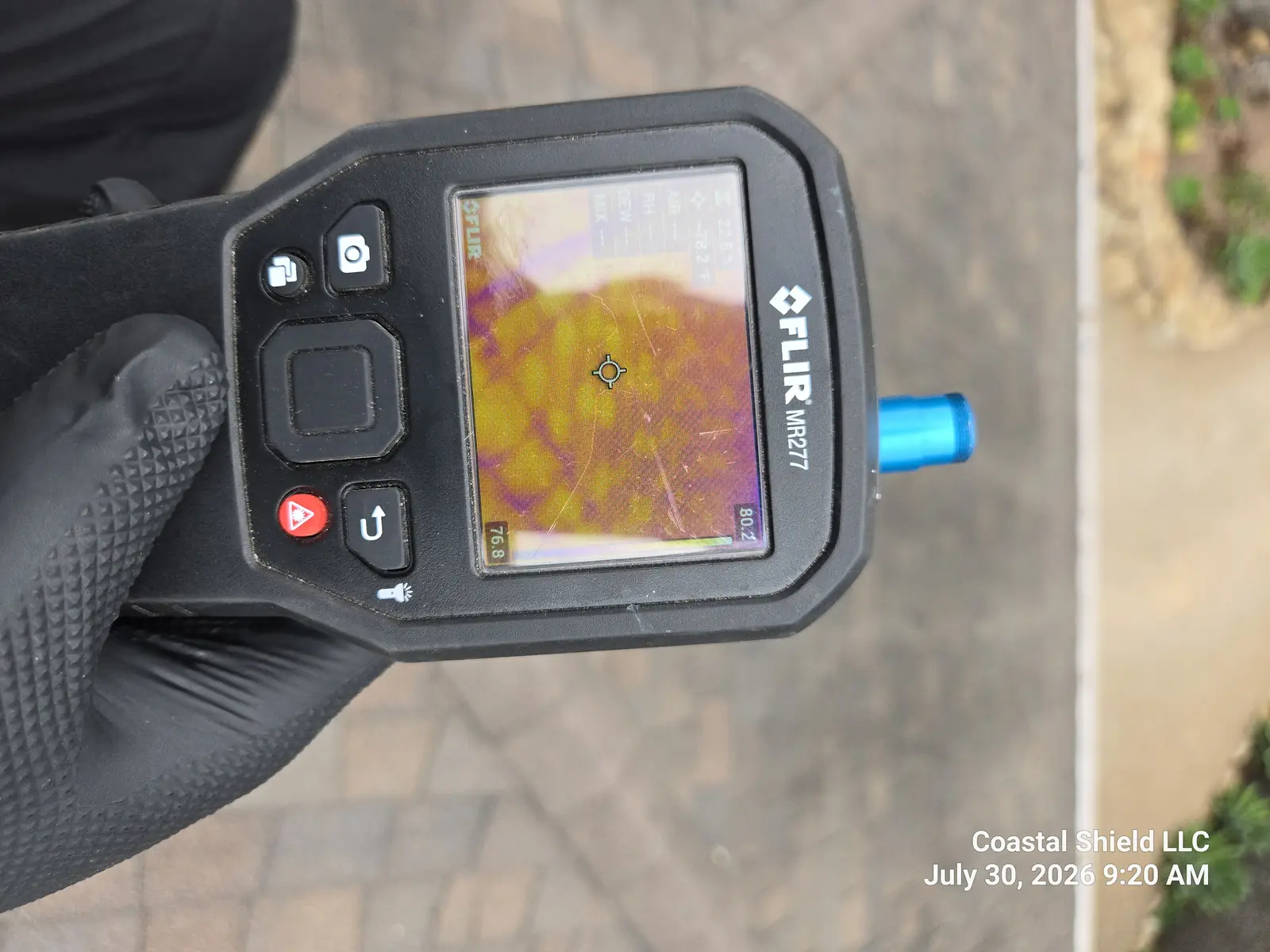
"May Gray" and "June Gloom" keep coastal homes — especially on the Mesa and near the beach — damp for months. We use thermal imaging to find hidden moisture and offer certified mold testing when it's warranted.
For the full picture, read our guide to the Top 7 Issues Found in Santa Barbara Homes.
The Final Walkthrough
When the systems review is done, we sit down with you (and usually your agent) for a summary walkthrough. This is not a sales pitch — we don't perform repairs, so we have zero incentive to inflate anything. We strictly follow the InterNACHI Code of Ethics, which means our only job is an objective assessment.
We'll separate the findings into what's urgent, what's worth negotiating, and what's just normal homeownership maintenance. The goal is for you to leave knowing exactly where the property stands.
Getting Your Report — Same Day
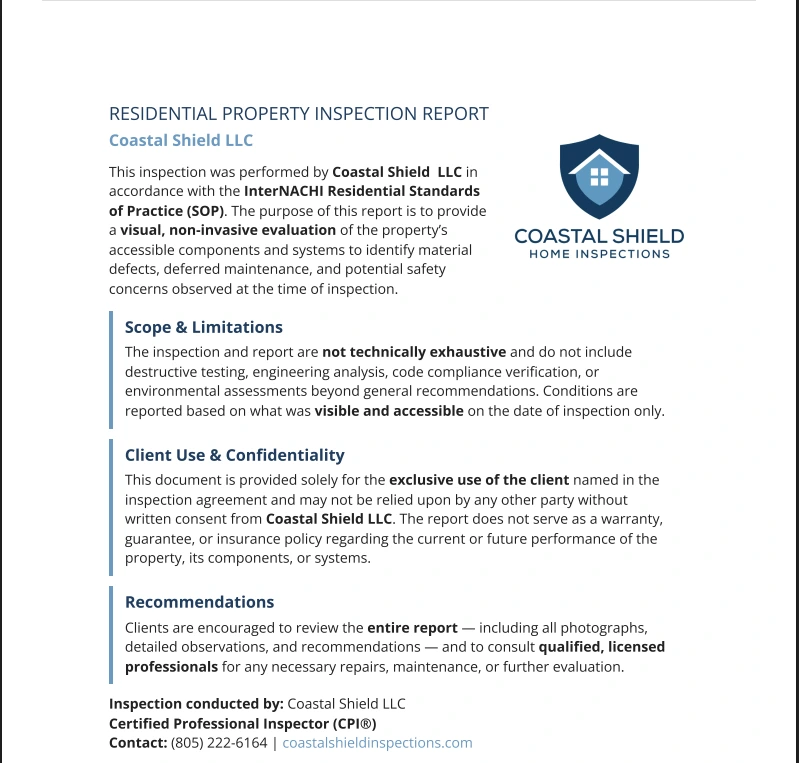
Santa Barbara real estate moves fast, and your inspection contingency clock is ticking. You'll have your complete report the same day, usually within a few hours of the inspection — not a confusing 200-page text dump, but a clean, interactive digital report on our own platform with:
- High-resolution photos of every finding, so you can see exactly what we saw.
- Repair-cost brackets based on local Santa Barbara contractor rates.
- A built-in repair-request builder — select the items that matter and the report generates a clean, agent-ready request for repairs in minutes, instead of copy-pasting from a PDF.
What Happens After
With the report in hand, you and your agent decide how to proceed during your contingency period — request repairs, ask for a credit, or move forward as-is. Because every finding is photographed and prioritized, you're negotiating with objective evidence rather than guesswork. And if a question comes up days later, we're a phone call away — we don't disappear once the report is sent.
Frequently Asked Questions
What Santa Barbara buyers most often ask about inspection day.