
From the Field: 8 Real Defects From Recent Santa Barbara Inspections
Every photo below is from a recent Coastal Shield inspection somewhere in Santa Barbara County. No stock images, no textbook examples — these are the real findings, with the real repair brackets from our reports. Addresses and clients stay private; the lessons should not.
Here is what was hiding in homes that, from the curb, looked perfectly fine.
1. A Zinsco Main Disconnect, Corroding From the Inside
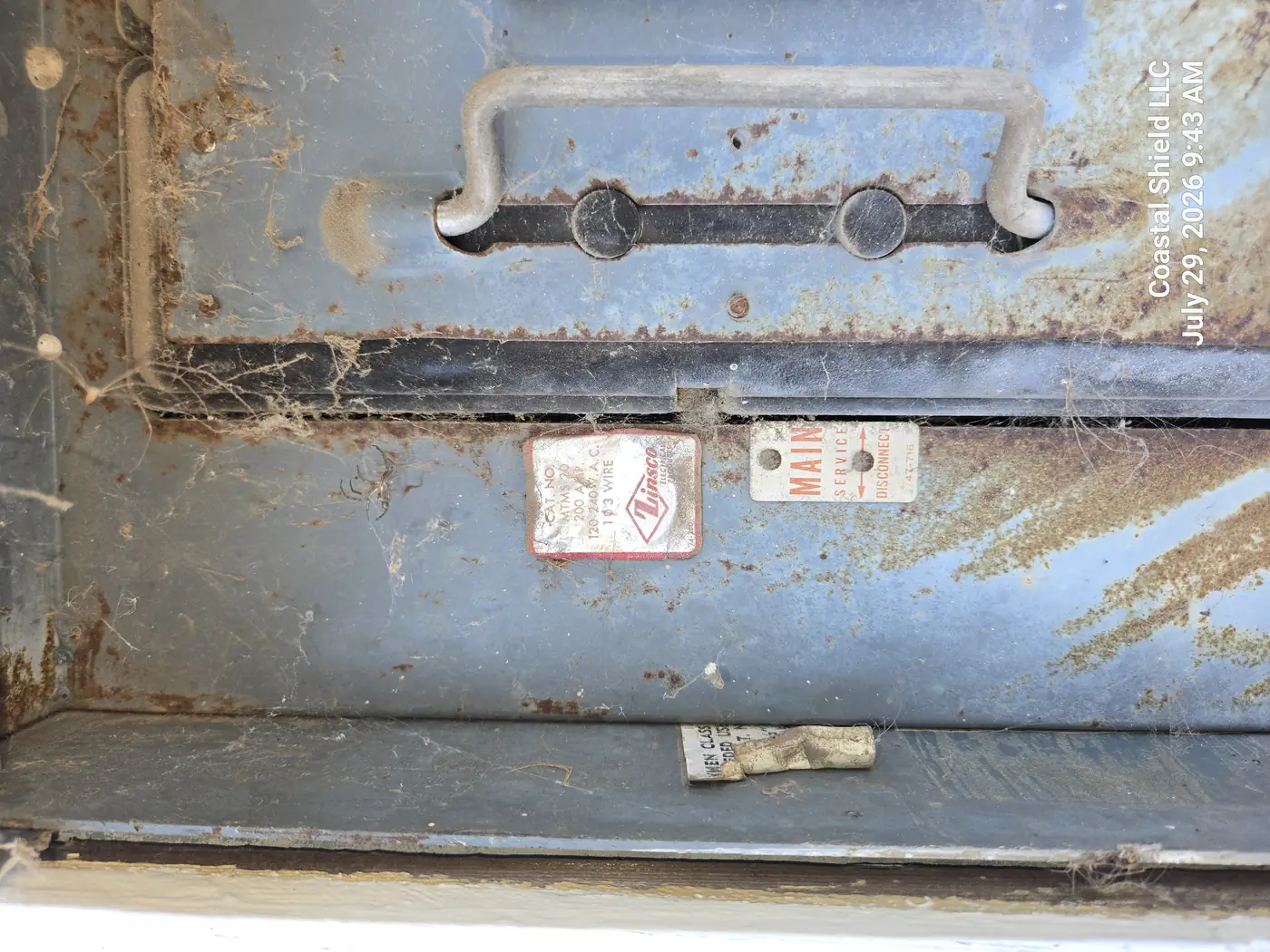
The main service disconnect was a Zinsco fused pull-out, 200 amps — and the enclosure interior was corroded across the back panel and around both pull-out blocks. Zinsco is one of two panel brands with a documented history of failing to protect: bus connections deteriorate and overheat, and devices can fail to open under fault. Corrosion this advanced accelerates exactly that failure mode.
From the outside, this was a gray box on a wall. Every buyer had walked past it.
Typical cost to correct: $2,500 – $5,000 · Why Zinsco panels matter →
2. A Federal Pacific Stab-Lok Sub-Panel, Still in Service
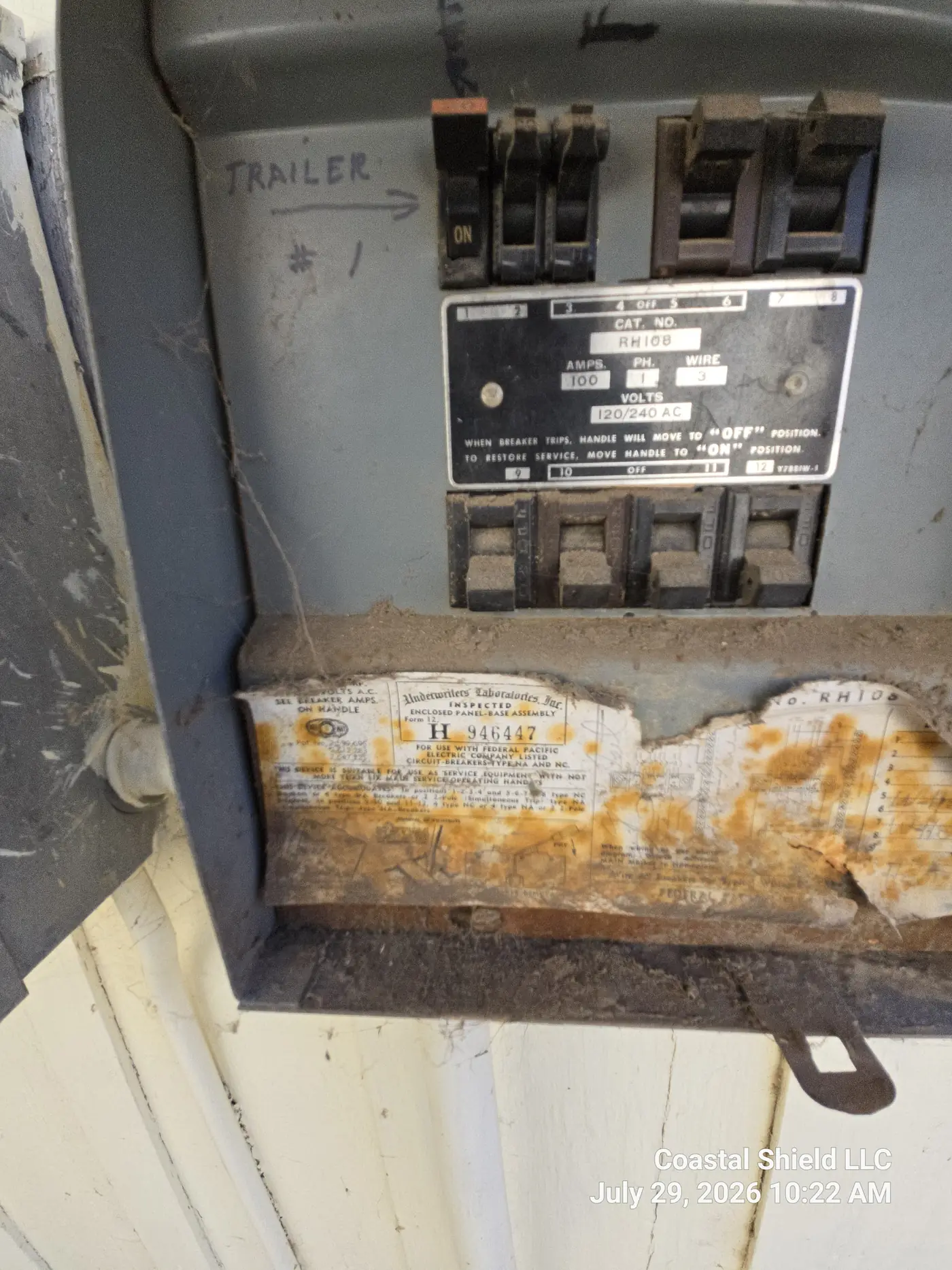
The label inside this rusted sub-panel was still legible: Federal Pacific Electric, Catalogue RH108, 100 A, breaker types NA and NC. FPE Stab-Lok breakers have a long-documented history of failing to trip on overload while appearing and testing perfectly normal at the handle — which is why no test at the switch can clear them.
This one fed a circuit hand-marked “trailer.” A breaker that may not trip, feeding a dwelling.
Typical cost to correct: $1,800 – $3,500 · Our full FPE Stab-Lok guide →
3. Galvanized Piping Held Together With a Hose Clamp
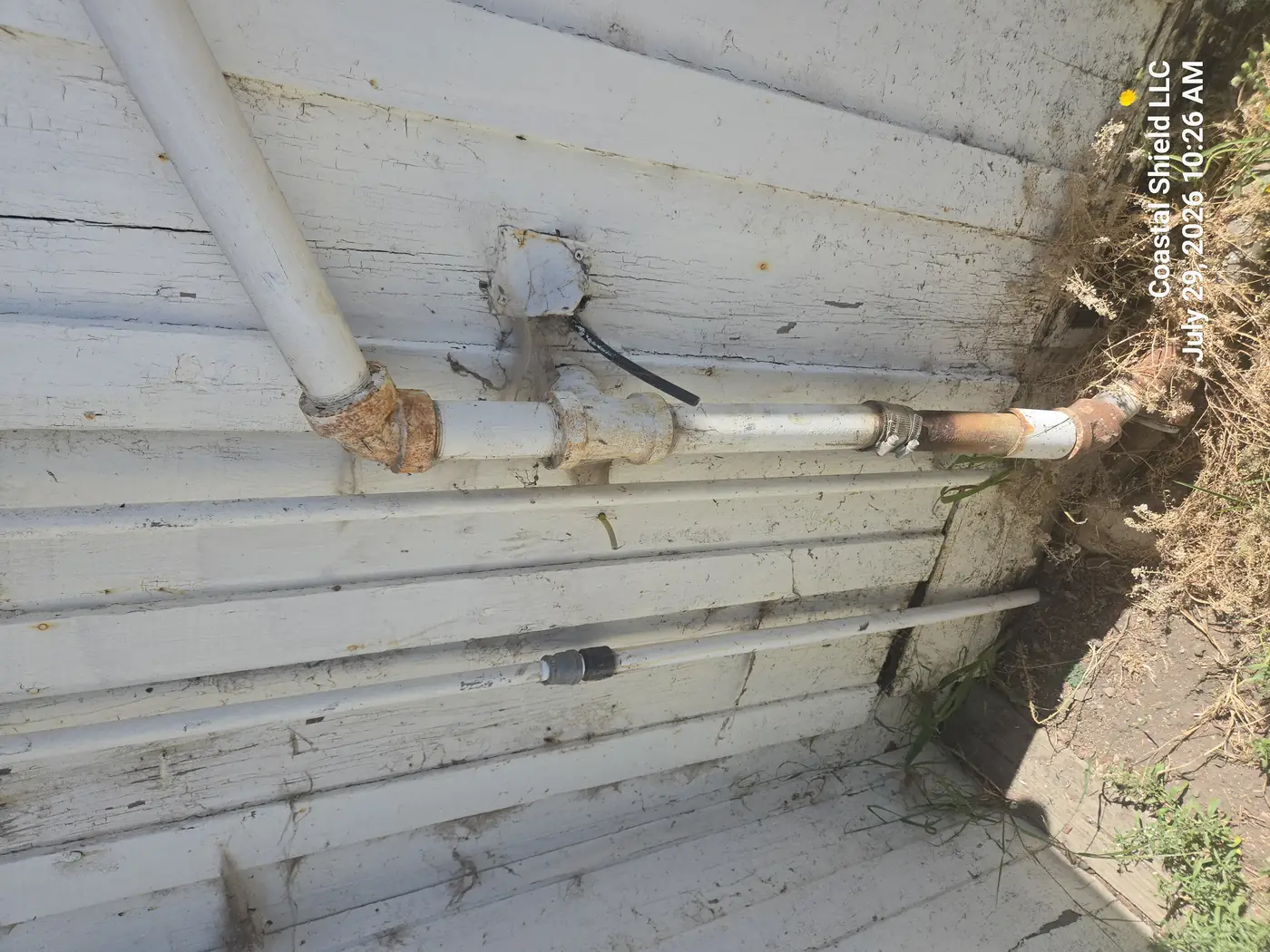
Galvanized supply piping ran across the face of a wall with every visible fitting corroded — and at one coupling, the pressurized potable line was joined with a hose clamp. That is a field expedient, not a plumbing fitting. Directly above it: a live electrical junction box.
Galvanized pipe fails from the inside out, so the rust you can see at the joints is the late chapter of the story, not the first one.
Typical cost to correct: $900 – $2,500, plus electrical make-safe · How galvanized pipe fails →
4. No GFCI Protection Anywhere in the Unit
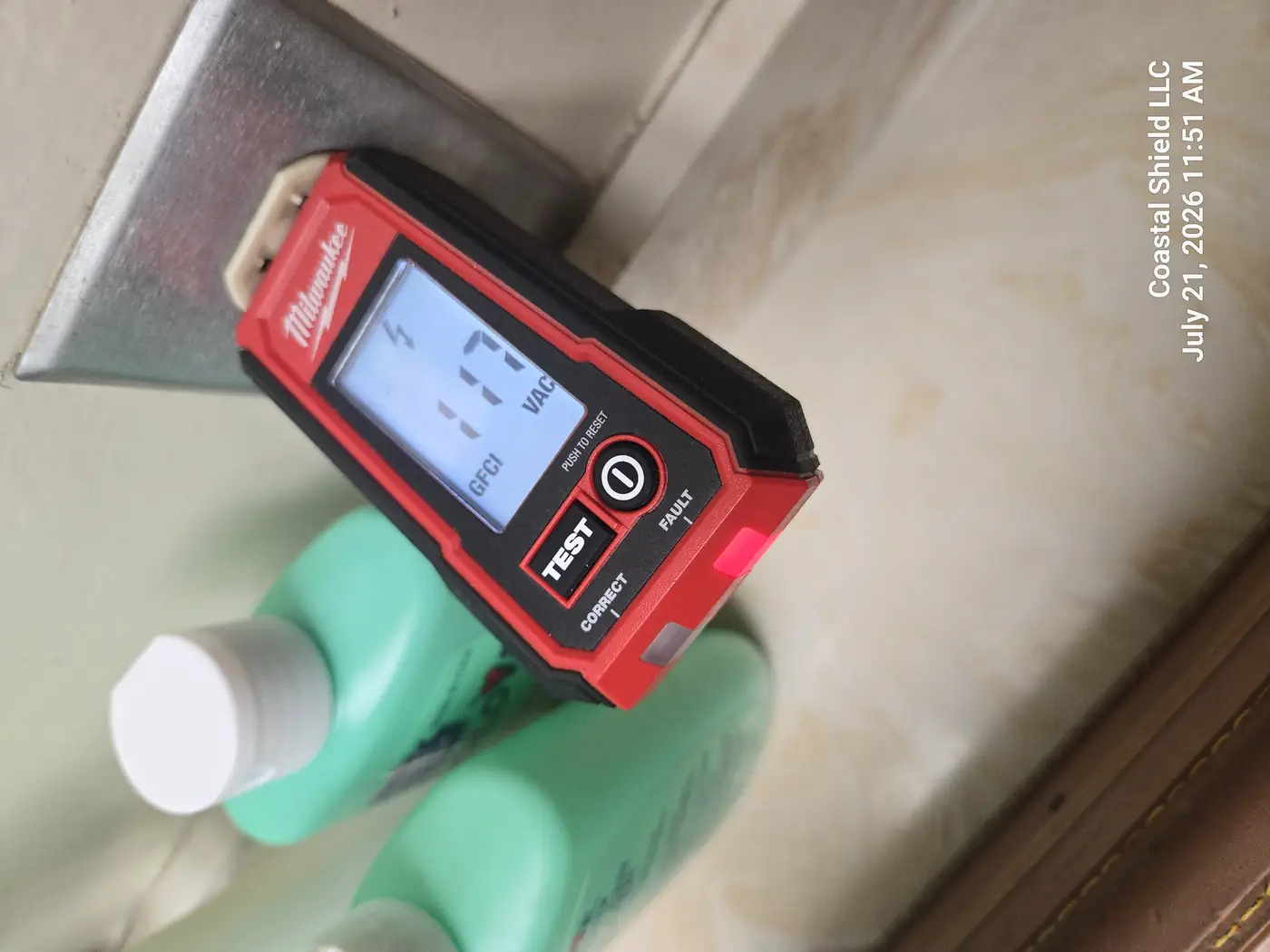
We test ground-fault protection at every accessible wet-location receptacle. In this unit there was none to find: not at the kitchen counter, not in the bathroom, and no GFCI breakers in the sub-panel. GFCI protection is the device that cuts power in milliseconds when current finds a path to ground through a person — it is required at kitchens and baths precisely because that is where water and electricity meet.
The telling detail: a neighboring unit in the same building had full, functioning protection. Upgrades had happened unit by unit — and this one was skipped.
Typical cost to correct: $400 – $900 per unit · What our electrical checks cover →
5. Smoke Alarms Pushing 30 — Two Failed the Test
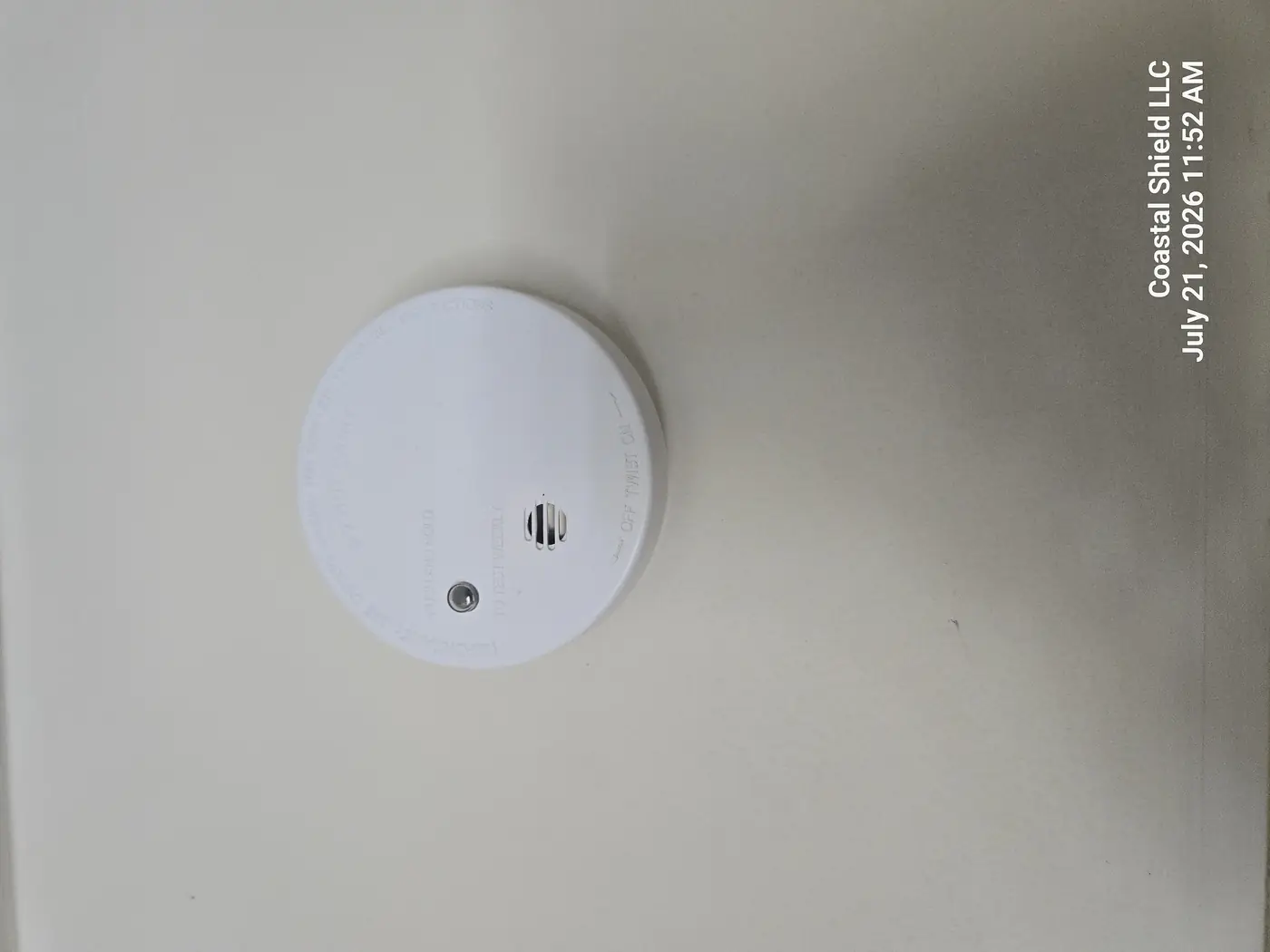
The yellowed housings dated these alarms to roughly 25–30 years in service. Two did not respond to testing at all. Manufacturers specify a ten-year life for smoke alarms because the sensing element degrades whether or not the horn still chirps — a unit can pass its button test and still miss real smoke.
This is the cheapest life-safety fix on this entire list.
Typical cost to correct: $200 – $500 for a full set · Every inspection includes alarm testing →
6. The Hotspot Only a Thermal Camera Could See
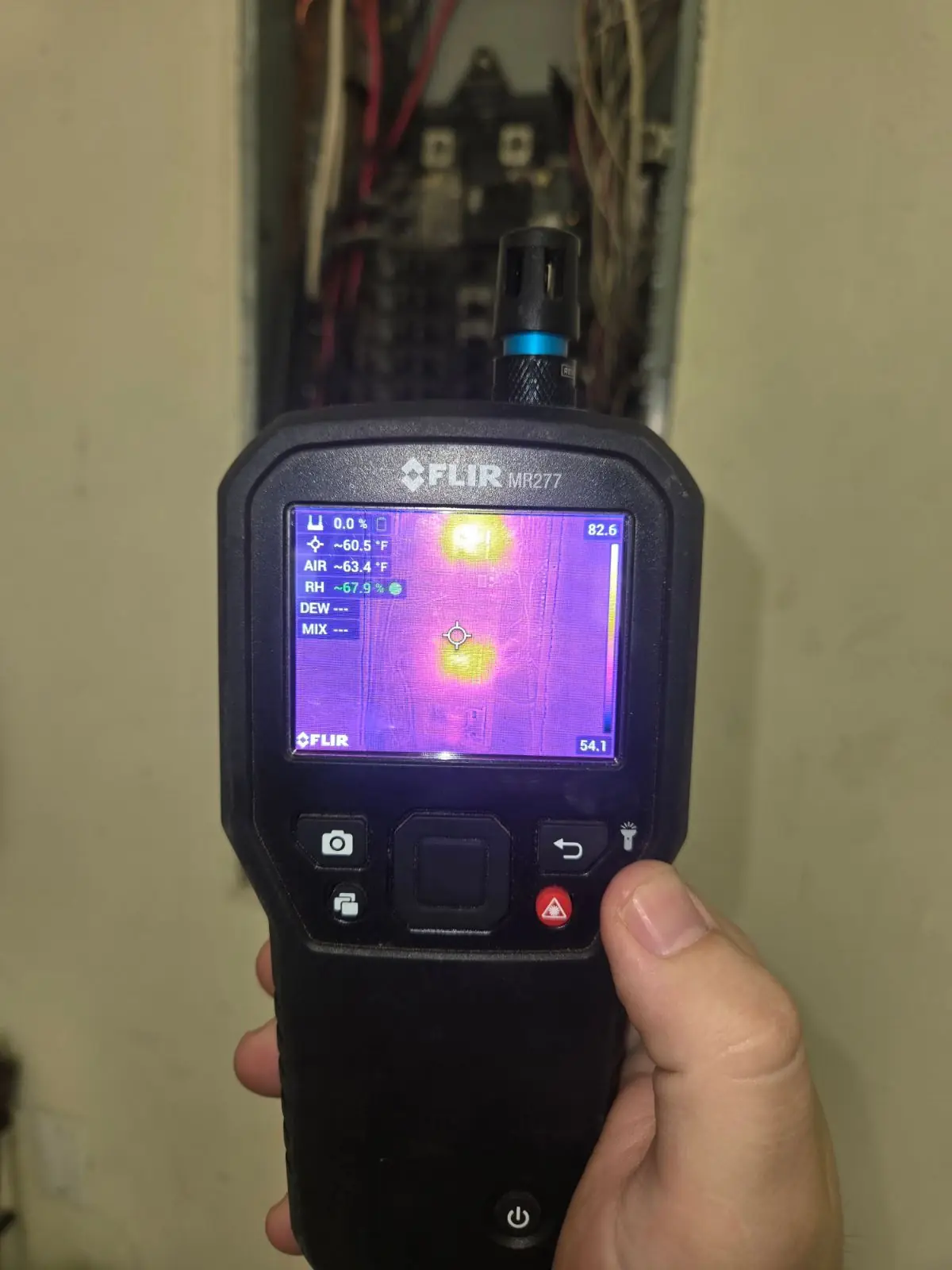
This panel looked normal to the eye. Under thermal imaging, one AFCI breaker was running roughly 28°F above its neighbors, with heat discoloration and white staining on the housing — the signature of a loose or failing connection generating heat under load.
Loose connections do not announce themselves; they cook quietly until they arc. We run a FLIR scan on every panel we open.
Typical cost to correct: $400 – $1,200 · How findings like this reach your report →
7. A Deck Waterproofed With Caulk
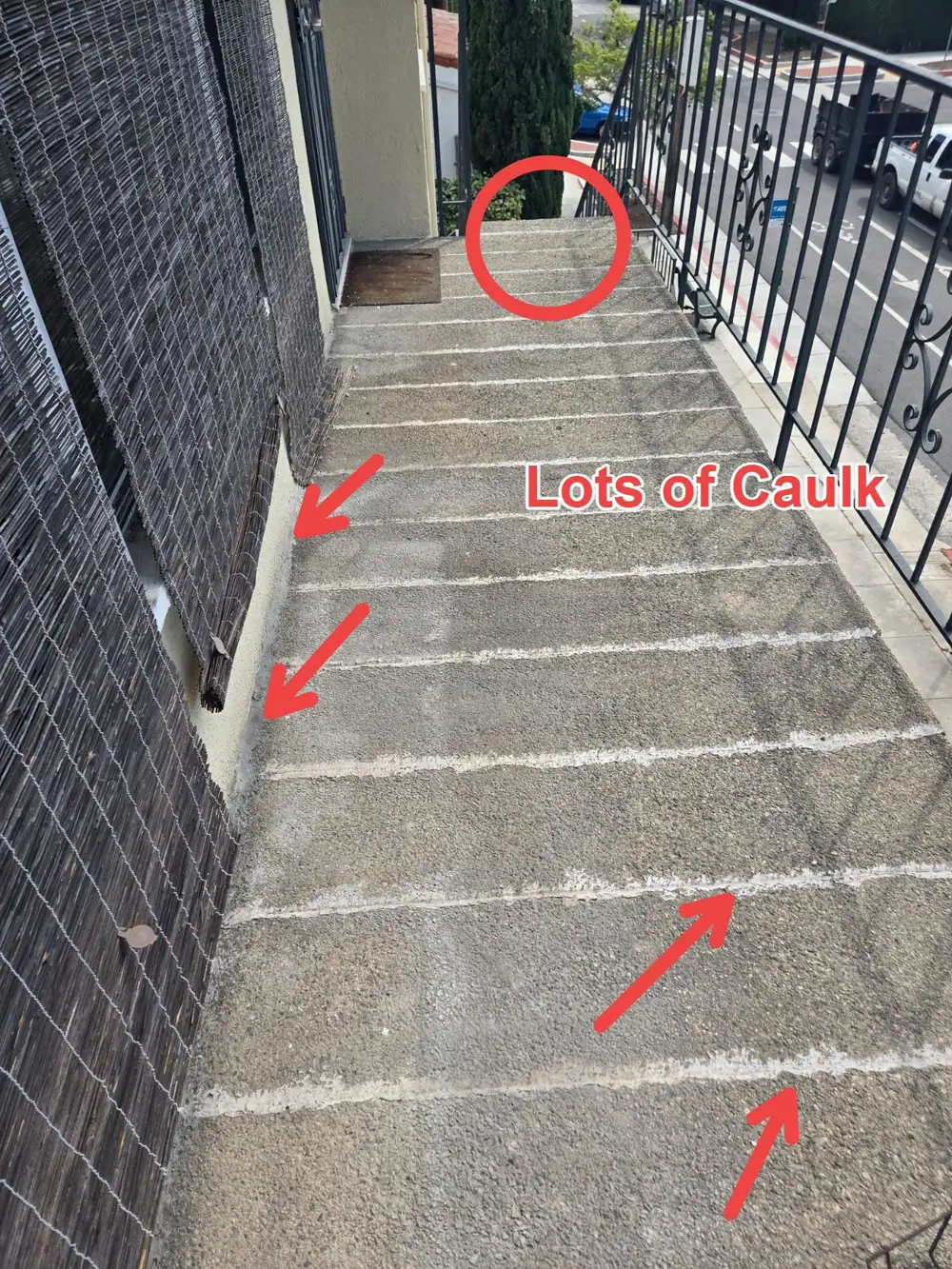
Every joint on this elevated walkway had been filled — repeatedly — with caulk. Caulking a deck is a temporary patch pretending to be a waterproofing system: the membrane below had failed, and moisture was migrating into the structure beneath, on steel framing.
Elevated exterior walkways are exactly the assemblies California’s balcony inspection laws exist for. Caulk lines like these are the tell.
Typical cost to correct: $4,500 – $8,500 · Roof and waterproofing assessments →
8. The Improvised Shower Supply
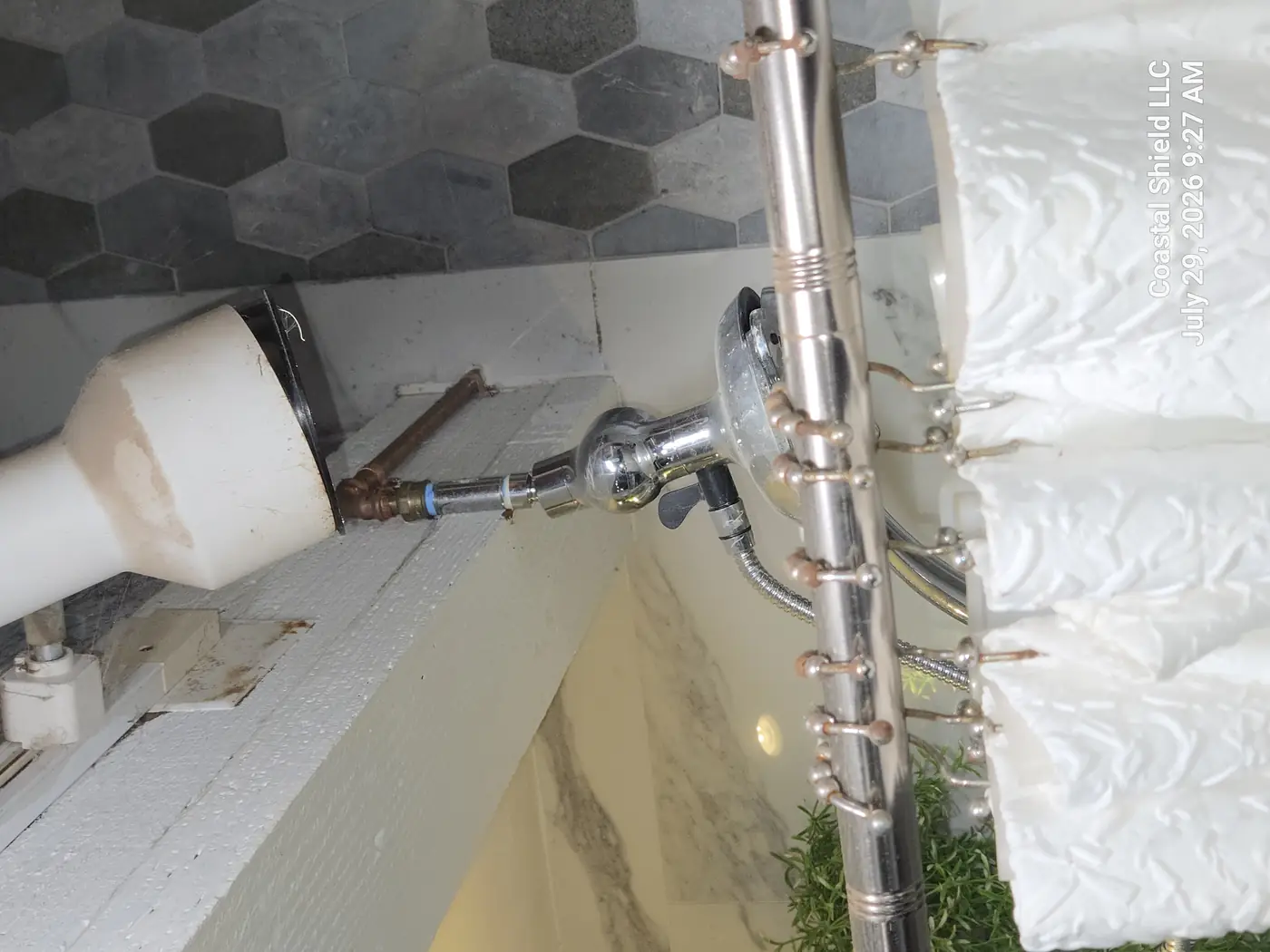
Behind a brand-new-looking tiled shower: a copper stub through an unsealed wall opening, a push-to-connect fitting, a braided connector, and a flexible hose standing in for a proper roughed-in shower arm. Rust staining on the ledge below said water had already been finding its way out.
Push-fit connectors are designed for accessible locations — not buried in assemblies where their O-rings age unseen. Fresh tile over improvised plumbing is one of the most common patterns we find in flipped and remodeled homes.
Typical cost to correct: $600 – $2,500 depending on what the wall reveals · Trade-level plumbing inspections →
The Pattern Behind the Photos
Four of these eight findings came from a single property — the Zinsco disconnect, the Stab-Lok sub-panel, the hose-clamped galvanized line, and the improvised shower. That is how it usually goes: deferred maintenance clusters. A house that improvises one repair has usually improvised several, and the visible shortcut is rarely the only one.
None of these were visible from a walkthrough. All of them were photographed, priced, and placed on an interactive defect map in the client’s report the same day.