Wildfire Home Hardening & Defensible Space in Santa Barbara (Zone 0, Explained)
Santa Barbara is one of the most beautiful — and most fire-exposed — places to own a home in California. The research is clear that how a house is built and maintained largely decides whether it survives an ember storm, and most of the highest-impact steps are things you can see, document, and check. Here's what defensible space, home hardening, and the coming "Zone 0" rules actually mean for your home.
By Louis O'Connor, InterNACHI Certified Professional Inspector & Licensed California Contractor
Why Santa Barbara Is High-Risk
Our wildfire risk isn't theoretical — it's written into the recent history of the front country.
Sundowner winds
Santa Barbara's signature hazard is the Sundowner wind: a hot, dry, often violent downslope wind that rushes down the Santa Ynez Mountains toward the coast.
They typically hit in the late afternoon and evening — exactly when a fire is hardest to fight.
The fire history
Those winds have driven our most destructive fires:
- 2008 Tea Fire: destroyed roughly 210 homes across Montecito and Santa Barbara in a single night, pushed by gusts approaching 85 mph.
- 2009 Jesusita Fire: burned 8,733 acres and about 80 homes as it tore through Mission Canyon and Rattlesnake Canyon.
- 2017 Thomas Fire: grew to 281,893 acres — the largest in California history at the time — and the bare burn scar it left above Montecito set the stage for the catastrophic January 2018 debris flow.
Today's FHSZ designations
Under CAL FIRE's updated 2025 Fire Hazard Severity Zone (FHSZ) maps, many of our foothill neighborhoods — Montecito, Mission Canyon, the Riviera, and the Goleta foothills — are designated High or Very High.
If your home backs onto the mountains or the chaparral — the Wildland-Urban Interface (WUI) — wildfire readiness isn't optional; it's part of owning here.
It's the Embers, Not the Flames
Here's the single most important idea, and the one most homeowners get wrong: most homes that burn in a wildfire are not destroyed by a wall of advancing flame.
They're ignited by wind-blown embers — sometimes landing a mile or more ahead of the fire front — that find something combustible and smolder until they catch.
An ember doesn't care how big your lot is. It cares whether there are dry pine needles in your gutter, a wood fence touching your siding, a pile of bark mulch against the wall, or an unscreened attic vent it can blow through.
Everything that follows — defensible space and home hardening — is about one goal: denying embers a place to take hold.
The Three Defensible-Space Zones
California organizes the area around a home into three "home ignition zones."
Two of them — Zones 1 and 2 — are already required by law (PRC 4291, the Public Resources Code) for properties in high-risk areas, and 100 feet of defensible space is the standard.
Zone 1 — 5 to 30 ft
The "lean, clean, and green" zone. Remove dead plants, dry grass, leaves, and needles from the yard, roof, and gutters.
Keep grass mowed to about four inches. Cut "ladder fuels" — the brush under trees that lets a ground fire climb into the canopy — and keep tree canopies spaced roughly ten feet apart.
Zone 2 — 30 to 100 ft
The "reduce fuel" zone. Mow annual grasses low, clear fallen debris, and create both horizontal and vertical spacing between shrubs and trees.
On our steeper hillside lots that spacing needs to increase — fire moves faster uphill, so slope demands more separation.
Then there's the newest, most-talked-about zone — the first five feet — which deserves its own section.
Zone 0: The New Ember-Resistant Zone
What AB 3074 says
Zone 0 is the proposed "ember-resistant zone" covering the first five feet around your home and attached decks — the strip where an ember is most likely to ignite the structure itself.
It was created in concept by state law AB 3074 (2020), but here's the part that confuses everyone: the detailed rules are not in effect yet.
Current draft status
The Board of Forestry and Fire Protection was directed to finalize Zone 0 regulations by December 31, 2025, but missed that deadline after strong public pushback against early drafts that would have banned nearly all vegetation within five feet.
After more revision, the Board released an updated draft on April 17, 2026 that takes a softer, education-first approach phased in over roughly five years.
What it will require
Under the current draft, the first phase (within about three years) focuses on the easy, high-impact wins: removing combustible items within five feet of the house — firewood, dead leaves and branches, bark mulch, and wood chips — with a stricter noncombustible "safety zone" right against the walls and under the eaves.
When it's finalized, Zone 0 is expected to apply to homes in the State Responsibility Area and in Very High Fire Hazard Severity Zones — which, as noted above, includes a lot of Santa Barbara's foothills.
The practical takeaway: the timeline keeps moving, but the direction is locked in, and the cheapest version of "compliance" costs nothing.
Pulling firewood, mulch, and dead plants out of the first five feet around your home — and swapping bark mulch for gravel or stone — is something you can do this weekend, and it's the highest-return wildfire step you can take.
Home Hardening: What We Check
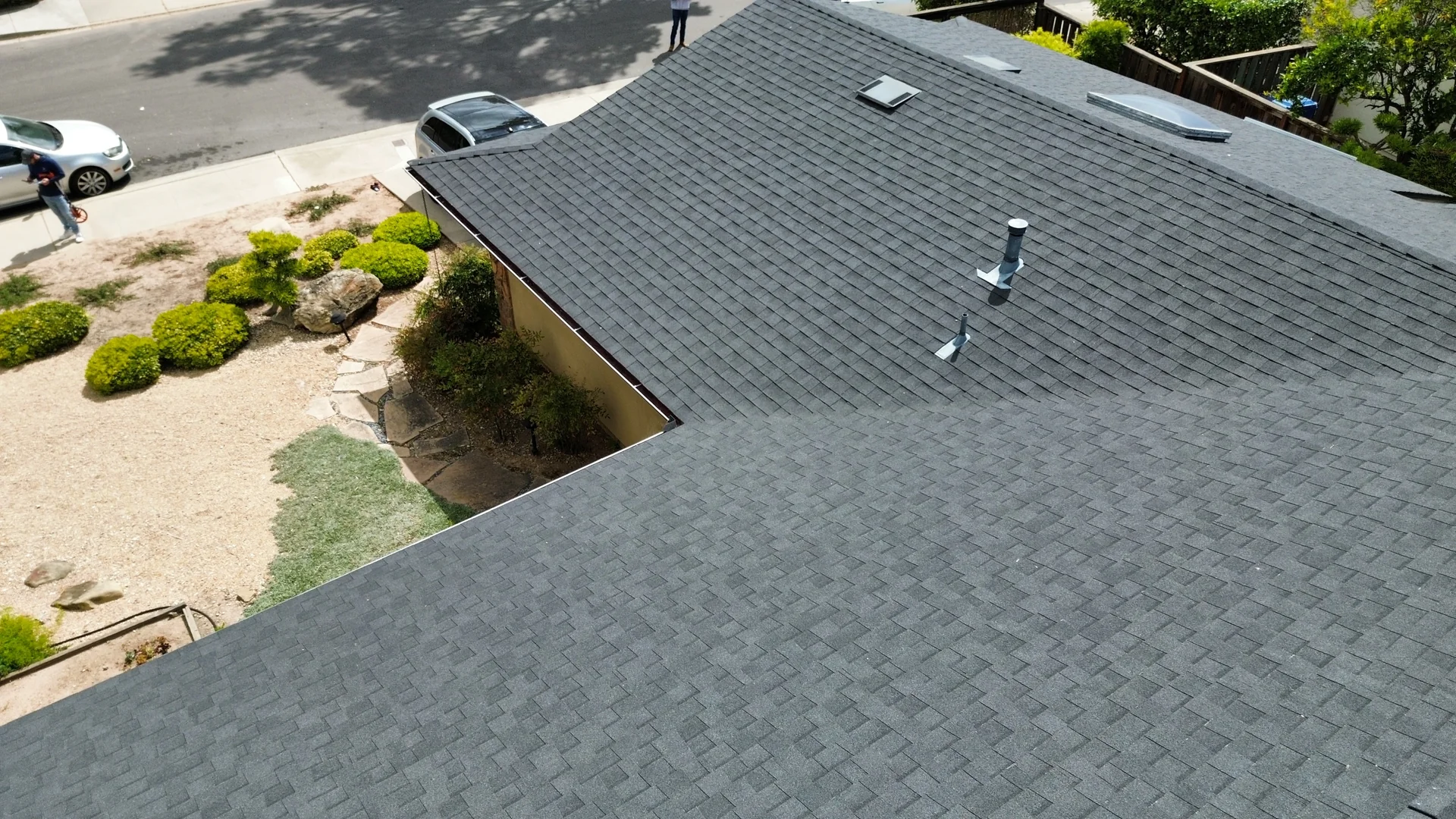
Defensible space buys your home a fighting chance; home hardening is what actually keeps embers out of the structure.
These are the components we evaluate and photograph, and the ones insurers increasingly ask about.
Roof & vents
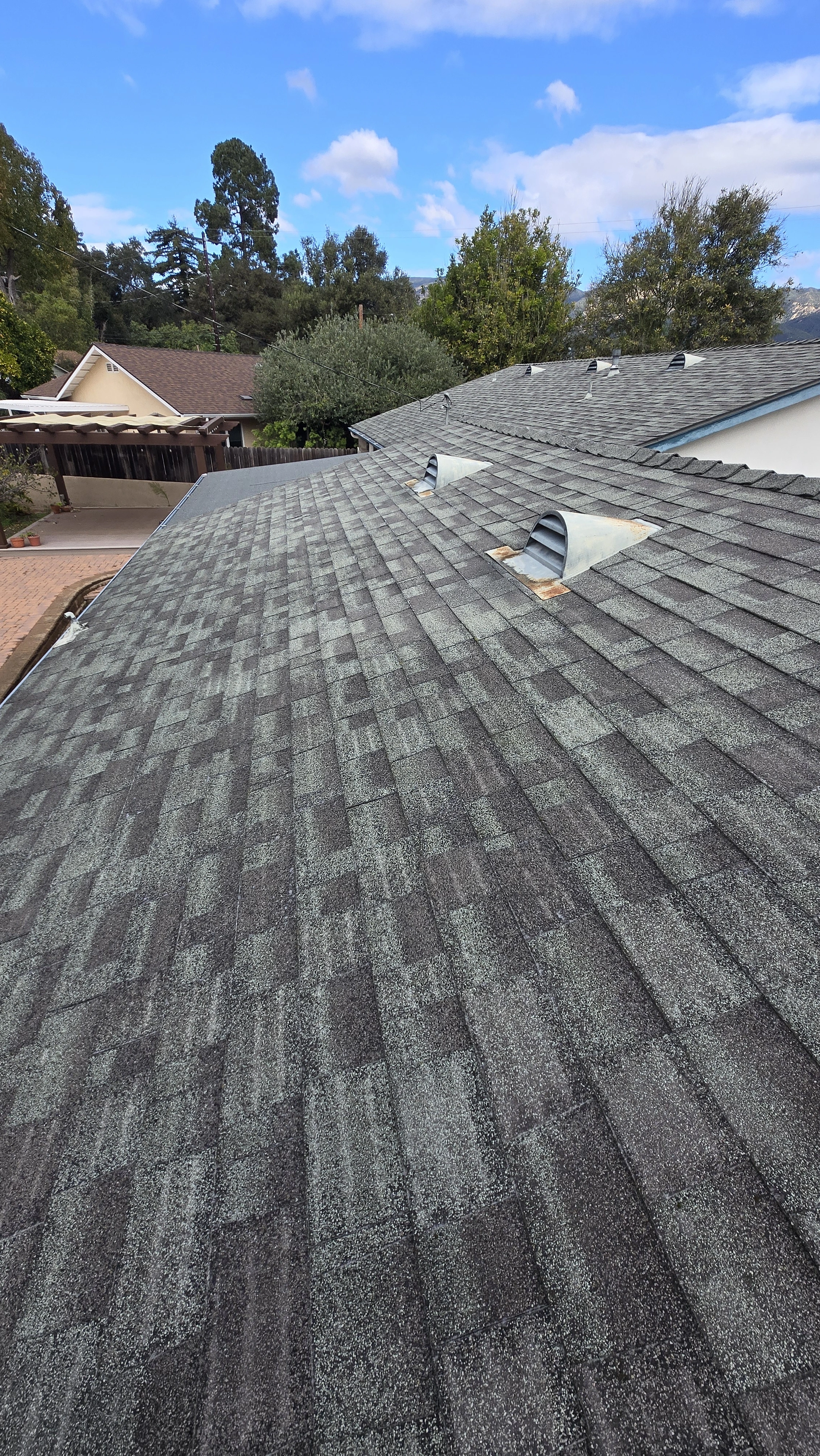
- Roof (the #1 priority): a Class A fire-rated covering — composition shingle, concrete or clay tile, or metal. In Santa Barbara, a handsome Spanish tile roof can still hide failed, brittle underlayment, which is both a leak and a fire concern. See our tile-roof underlayment guide and roof inspection page.
- Vents: the top ember-entry point into attics and crawlspaces. We look for corrosion-resistant metal mesh of 1/8-inch or smaller (1/16-inch is better), or — best of all — WUI-listed, ember-rated vents tested to ASTM E2886.
Eaves & windows
- Eaves & soffits: open eaves trap embers under the roofline. Boxed-in, enclosed eaves with ignition-resistant materials are the goal.
- Windows: radiant heat cracks single-pane glass and lets fire inside. Dual-pane windows with at least one tempered pane are the recommended standard.
Siding & decks
- Siding & walls: noncombustible or ignition-resistant exteriors — and good news for us, the stucco that's so common on Santa Barbara homes performs well here.
- Decks & the space beneath them: decks within about ten feet of the home should use ignition-resistant materials, and the area underneath must be kept clear of vegetation and stored combustibles — it's a classic ember trap.
Fences & gutters
- Fences: a wood fence that connects to the house acts like a fuse, carrying fire straight to the siding. The section where a fence meets the structure should be noncombustible (metal).
- Gutters & garage: keep gutters clear of needles and leaves (noncombustible gutter guards help), and add weatherstripping around and under garage and exterior doors to block blowing embers.
The 0–5 ft perimeter
This strip — the future Zone 0 — is where home hardening and defensible space converge. See the Zone 0 section above for the specific items to pull out (firewood, mulch, dead plants) and to swap in (gravel or stone).
Every one of these is visual and documentable — which is exactly why a home inspection is the natural place to capture them. Each finding lands in the photo-rich report you receive the same day.
Mitigation & Your Insurance
If you own in Santa Barbara, you already know the other half of this story: California's home-insurance market is under severe strain.
Major carriers have pulled back, non-renewals have surged, and hundreds of thousands of homeowners now rely on the state's insurer of last resort, the FAIR Plan.
In this environment, wildfire mitigation isn't just about safety — it's about staying insurable.
Safer from Wildfires framework
The leverage runs through California's "Safer from Wildfires" regulation, the first of its kind in the country.
It requires insurers that price by wildfire risk to give discounts for qualifying mitigation across two levels:
Home-hardening measures
Class A roof, enclosed eaves, ember-resistant vents, multi-pane windows, and a six-inch noncombustible base at the walls.
Immediate surroundings
Clearing the 0–5 ft zone, no combustibles under decks, and noncombustible fencing where it meets the home.
FAIR Plan discount
The FAIR Plan itself now offers wildfire-hardening discounts — up to roughly 16% off the wildfire portion of premium for homeowners who complete all the measures, with more available for homes in a recognized Firewise USA community.
What insurers want documented
The currency for all of it is documentation. By regulation, insurers must accept CAL FIRE or local fire-department verification, and they increasingly want dated photos of your roof, vents, eaves, and five-foot perimeter, plus receipts for upgrades.
A home inspection that records your roof class, vent type, eave construction, and deck and fence materials gives you precisely the evidence they're asking for.
For more on staying covered, read why California insurers cancel policies and our guide to the California 4-point inspection, or see our insurance inspection services.
Buying or Selling in a Fire Zone
Wildfire readiness now shows up at the closing table.
Sellers
If you're selling a home in a High or Very High Fire Hazard Severity Zone, California law (PRC 4291 and AB 38) and Santa Barbara County ordinances generally require documentation of compliant defensible space at the time of transfer.
Buyers
Make hardening and defensible space part of your due diligence right alongside the standard inspection — an uninsurable roof or a five-foot zone packed with combustibles is a real cost, not a cosmetic one.
For the bigger picture of what tends to surprise buyers here, see our guide to the Top 7 Issues Found in Santa Barbara Homes, and how it all fits into a real estate transaction on our escrow inspection page.
Frequently Asked Questions
What Santa Barbara homeowners most often ask about Zone 0, defensible space, and home hardening.